The Youth Soccer Development Intelligence Platform

Why Development
Needs Measurement

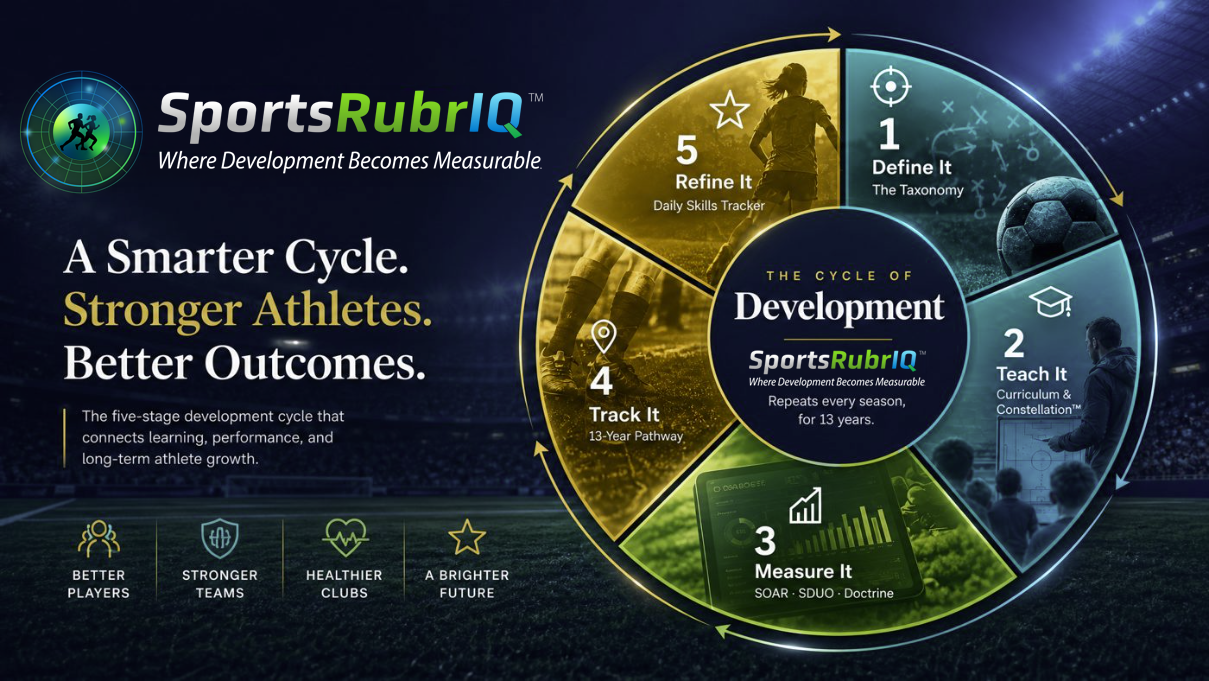
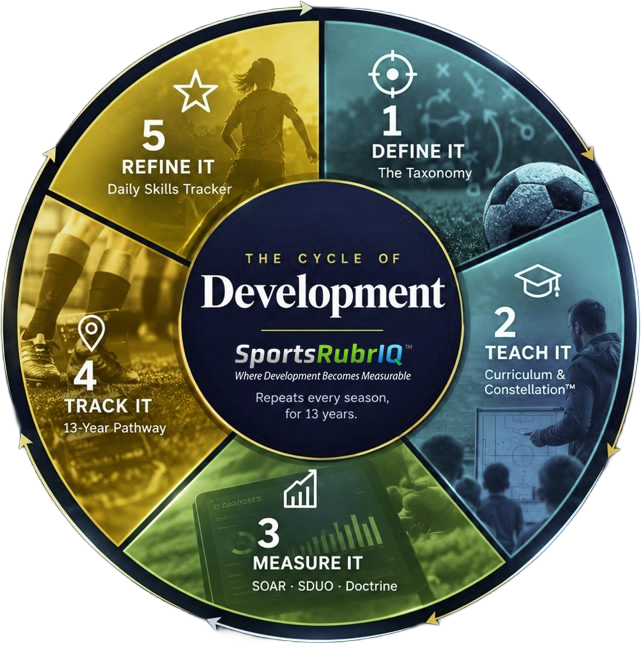
Development is a process, not an event. Observation can provide valuable insight, but it cannot consistently show whether a player is learning, applying, and progressing over time. SportsRubrIQ uses measurement to provide evidence of development, identify areas for improvement, and track meaningful progress. What gets measured can be understood, acted upon, and improved. SportsRubrIQ brings the developmental journey into one connected system for players, coaches, teams, and clubs. By connecting player data with curriculum and assessment, the platform helps inform what should be taught, what should be practiced, what should be assessed, and what should happen next. From assessment to action to advancement, SportsRubrIQ makes development a continuous journey.

13yr

DEVELOPMENT TRACKING

8-level

GAME TAXONOMY

250+

SKILLS, TRAITS & CONCEPTS

3

PORTALS: PLAYERS · COACHES ·DIRECTORS

WATCH THE INTRODUCTION

A two-minute look at
the framework

A short walkthrough of the SportsRubrIQ Performance System™ — the philosophy, the rubric, and the developmental story it makes visible.

Play

Now

A NORTH STAR REFERENCE

The Assessment Doctrine.

Most player development tools measure activity. SportsRubrIQ™ approaches development differently. The difference is structural, pedagogical, and philosophical. Four principles define how the system thinks about players, coaches, evidence, and progression.
Refined is mastery, not a four.
Score the pattern, not the moment
The SOAR rubric is not a flat four-point scale. Seldom, Often, and Always describe the developmental arc every player travels. Refined is a ceiling marker-the threshold of true mastery, calibrated to Stage 5. When Refined is scored at an earlier stage, it is not a routine four out of four; it is a signal of exceptional, stage-defining performance. Coaches are taught to score Refined sparingly and honestly. The integrity of the rubric, and the data behind it, depends on it.
Stage is where the player is, not where their birthday says they should be.
Age tells you when a player was born. SOAR tells you where they are.
Traditional youth development groups players by age bracket and assumes the bracket defines the curriculum. SportsRubrIQ™ approaches it differently. Stage is a property of the individual player, determined by the developmental work they are demonstrably ready for not by the year on their birth certificate. A team has a default stage the coach is teaching to. Each player on that team has their own current stage which may match the team default, lag behind it, or outrun it. The SOAR record is the evidence.
Advancement is earned through evidence — both teaching and learning.
Players advance when the evidence supports it
A player advances to the next stage when two things are true at once: the coach has effectively taught the material at the current stage, and the player has demonstrably learned and applied it. Both halves are required. SOAR data, captured across formative, ongoing, and summative cycles, is the record that makes the answer visible. The platform surfaces the recommendation; the coach confirms the call; the evidence stands behind it. No advancement happens on a hunch.
Replace soccer subjectivity with educator objectivity.
The right question isn't "is this a good player?" It's "is this coach effectively teaching, and is this player effectively learning?"
Traditional assessment leans on the coach's subjective knowledge of the sport — the experienced eye that says "I know a good player when I see one." That subjectivity can vary across coaches and conflate playing knowledge with teaching effectiveness. SportsRubrIQ™ relocates the judgment. The platform does not replace the human; it changes which human capability is being exercised. The lens shifts from soccer eye intuition to adult-educator practice: pedagogy, curriculum, evidence, and reflection. Coaches are evaluated as teachers, players are evaluated as learners, and the developmental arc becomes measurable.

Get Started

These four principles are not aspirational. They are operational.

The platform's data model encodes them. The assessment UI presents them. The agreement protects them. The marketing copy expresses them. Coach onboarding teaches them. When a design decision creates ambiguity, the Doctrine is the tiebreaker.

THE DEVELOPMENT ROADMAP

The SportsRubrIQ 13-Year Developmental Pathway
From Foundation to Fluency

We built SportsRubrIQ around a simple idea: the soccer journey from age 5 to 18 shouldn't be left to chance. That's why we organized it into a structured, measurable 13-year developmental pathway — five progressive stages that define what players should learn, demonstrate, and refine as their technical, tactical, cognitive, and physical abilities grow. We don't define where a player competes. We define what they develop — giving players and clubs a clear progression from foundational skills to refined game fluency.
Stage 0 Baseline
Inception & Foundation
A child enters the system, their first “formative” baseline assessment, year one benchmarks
00
01
YEARS 1–3 • AGES 5–7
Stage 1 Fundamental – Individual
Players build confidence through ball mastery, 1v1, and simple partner play. Every technical and tactical concept begins with Me & the Ball.
YEARS 4–6 • AGES 8–10
Stage 2 Emergent – Partner
Players learn to solve problems together through 2v2–4v4 play. Support, movement, timing, and communication become the foundation of combination play.
02
03
YEARS 7–9 • AGES 11–13
Stage 3 Applied – Small Group
Players connect partnerships into functional units through 4v4–7v7. Tactical awareness grows as spacing, transitions, and positional relationships emerge.
YEARS 10–12 • AGES 14–16
Stage 4 Proficient – Team
Players integrate individual and unit play into the full team through 7v7–11v11. Team shape, systems of play, and collective decision-making become the focus.
04
05
YEAR 13 • AGES 17–18
Stage 5 Refined – Squad
Players demonstrate mastery within the complete 11v11 environment. Leadership, adaptability, and performance ownership prepare them for the next level.

Three reports. One year. Every year for thirteen years.

Every player receives three SOAR Index™ assessments per year, structured to capture different moments in the development cycle. Together, they produce a complete annual developmental record.

REPORT 1
Formative

Beginning of cycle · Baseline

Establishes the year's starting point. Captures where the player is on entry — across all four SOAR domains and the relevant stage skills. Sets the developmental targets for the cycle.

REPORT 2
Ongoing

Mid-cycle · Progress

Mid-year checkpoint. Reveals the trajectory — is the player tracking toward their summative targets? Allows coaches to recalibrate training focus before the cycle closes.

REPORT 3
Summative

End of cycle · Outcome

The year's full picture. Final SOAR scores, skill mastery records, and developmental
narrative. Becomes part of the permanent longitudinal record that follows the player
forever.

FIVE STAGES, ONE ROADMAP

250+ skills, traits & concepts.
Our Five Developmental Stages

The SportsRubrIQ Performance System™ contains over 250 individually tracked skills, traits, and concepts, distributed across the five development stages with deliberate progression. Each is age-appropriate, taxonomy anchored, and assessed using the SOAR Index™.
Stage 1 Fundamental
AGES 5–7 · INDIVIDUAL / PARTNER
We build movement,ball mastery, and confidence — establishing the four technical foundations:Control, Dribble, Pass, Shoot, along with an introduction to partner play.
FORMAT
7v7
SKILLS & CONCEPTS
~40
Stage 2 Emergent
AGES 8–10 · PARTNER / SMALL GROUP
We move players fromindividual play toward partner and small-group problem solving, introducingcombination play and our six tactical skills.
FORMAT
9v9
SKILLS & CONCEPTS
~40
Stage 3 Applied
AGES 11–13 · SMALL GROUP / TEAM
We help players applytheir technical and tactical skills in increasingly complex small-group andteam environments, building their awareness of phases, space, transitions, anddecision-making.
FORMAT
11v11
SKILLS & CONCEPTS
~45
Stage 4 Proficient
AGES 14–16 · TEAM / SQUAD
We developconsistency, positional understanding, tactical responsibility, and executionunder pressure within the full team environment.
FORMAT
11v11
SKILLS & CONCEPTS
~45
Stage 5 Refined
AGES 17–18 · SQUAD
We bring it alltogether — technical precision, tactical intelligence, decision speed,adaptability, and consistency in the full 11v11 game.
FORMAT
11v11
SKILLS & CONCEPTS
~45

MEASUREMENT ENGINE + LEARNING MODEL

Two systems.
One developmental story.

The SOAR Index measures frequency of the action. While the SDUO Progression Model measures the proficiency. Together they make development legible- domain by domain, step by step, player by player.

LEARNING MODEL

The SDUO™ Progression
Four steps.

S

SEE IT

Can the player recognize the action? Vision and pattern recognition before execution — spotting the moment before it happens.

D

DO IT

Can the player perform the action? Isolated, controlled repetition builds the mechanics and confidence to execute on command.

U

USE IT

Can the player perform the action in context? Game-like pressure and decision-making test whether execution holds up under real conditions.

O

OWN IT

Can the player dominate with the action? Full integration — automatic, instinctive, and used to influence the game.

THE 4-POINT RUBRIC SCALE

Refined is mastery. Score sparingly

MEASUREMENT ENGINE

The SOAR Index™
Four domains

1

SELDOM

Occasional, inconsistent execution. The skill is recognized but not yet reliable.

2

OFTEN

Reliable in familiar contexts. The skill works when conditions are favorable.

3

ALWAYS

Consistent and automatic, even under match pressure. The skill is internalized.

4

REFINED

Mastered with quality, precision, and influence - elevates those around them.

Players Toolbox

Daily Skills Tracker.

Your Development Defines You.

For too long, youth soccer has tried to fit every player into the same box. Recreational. Select. Premier. Elite. Labels that often say more about the team a player was placed on than the player themselves.

At SportsRubrIQ, we believe development isn’t defined by the badge on your jersey. It’s defined by the commitment you make to your own growth.

The player who spends twenty minutes every day mastering the ball will not remain the same player. The one who embraces repetition, tracks their progress, and builds consistent habits will separate themselves over time.

Talent may open the first door. Daily commitment determines how far you walk through it.

That’s why the Daily Skills Tracker exists.

It transforms personal practice into measurable progress, rewarding consistency and repetition, not reputation. Every completed session contributes to your SOAR Index™, building a clear picture of your dedication, your improvement, and your developmental journey.

At SportsRubrIQ, we don’t ask,“What level do you play?”

We ask,“How committed are you to becoming better than you were yesterday?”

Because in the end, your label shouldn’t be assigned by a club.

It should be earned through the work you choose to do when no one is watching.

Hard work beats talent, when talent fails to work hard

Build the habit. Score the pattern.

Every player receives a personalized weekly practice menu drawn from their current stage skills. Twenty minutes a day. Every completed check-in feeds the SOAR Index™, turning daily reps into measurable progress.

AVG Composite progress chart showing assessment cycles

Personalized weekly homework based on current stage and skill targets

Auto-progression of skills through SDUO™ levels with consistent reps

Parent visibility without parent involvement required

Direct integration with SOAR Index™ assessments

BUILT FOR CLUBS, ORGANIZATIONS, AND TEAMS

If you can import a roster, you can measure development.

SportsRubrIQ™ is designed to scale across organizational structures —from large multi-team clubs to single independent teams. Anyone managing players can deliver the assessment, curriculum, and longitudinalrecord.
CLUBS
Full club deployment

Multi-team, multi-coach, multi-stage rollout with director-level oversight.Curriculum compliance, coach quality, and cohort analysis across the whole organization.

ORGANIZATIONS
Academies & programs

Development academies, ID programs, and player pathways use SportsRubrIQ™ as the assessment and curriculum backbone for their programming.

INDIVIDUAL TEAMS
Coach-led teams

Single-team coaches running independent programming get the same assessment depth, curriculum library, and player-facing tools as a full club deployment.

CSV

Import your roster in seconds

Upload a CSV of player names, ages, and positions. The platform builds your team automatically — players are assigned to their stage, coaches see their roster, and assessment can begin immediately.

HOW WE'RE DIFFERENT

Built for development depth.

The youth sports tech market is crowded, but most existing platforms solve different problems. SportsRubrIQ™ is designed specifically to define, measure, and track player development over a 13-year arc.
Performance Scale · 100% width · responsive

The Performance Scale

Operational Logistics Player Development Depth
Development-First
Existing Platforms
SportsRubrIQ™
Comparison Table · 100% width · scrollable responsive

Compare today's most popular platforms with SportsRubrIQ™ and discover why development comes first.

Capability PlayMetrics TeamSnap + MOJO TeamGenius SportsEngine SportsRubrIQ™
Player Evaluations Basic Basic Basic Basic Advanced
13-Year Roadmap
Codified Learning Model
Proprietary Game Taxonomy
Geometric Shape Pedagogy
Daily Skills Tracker
Curriculum Library Drills MOJO Content Full Taxonomy
Longitudinal Tracking Season Season Season Season 13 Years
Primary Purpose Club Ops Team Mgmt Tryout Scoring Registration Player Development

Competitor names shown for illustrative comparison. All trademarks property of their respective owners. Comparisons based on publicly available product information as of 2026 and may be approximate. SportsRubrIQ™ does not claim feature equivalence with or endorsement from any of the platforms listed.

THE BIGGER PICTURE

One philosophy.
Many sports.

SportsRubrIQ™ is built for soccer first — but the philosophy underneath this universal. All invasion sports share the same fundamental architecture: two teams attacking opposite goals on a shared playing surface, transitioning between attack, defense, and the moment in between.
The game was never complicated.
Youth soccer has a marketing problem. It’s been sold to parents as a coaching problem. Most organizations grow by manufacturing complexity — more tiers, more travel, more showcases, more “exposure.” Complexity is easy to sell. It looks like premium development. It isn’t. It’s a business model built on access, not competence. SportsRubrIQ™ is built on the opposite premise: the game is already simple enough to teach honestly, if you teach the right layers, at the right scale.


“Score the pattern, not the format.”
The 5v5 philosophy
WHY WE START AT 5v5
THE SMALLEST HONEST UNIT OF THE GAME
WHAT WE MEASURE INSTEAD
From 5v5 to the full game.

Get Started

Ready to measure
what matters?

Join the coaches and clubs using the SportsRubrIQ Performance System™
to measure what matters — at every stage of every player's journey.

FAQs

What is SportsRubrIQ?

We're a B2B youth soccer player assessment and curriculum platform. We replace subjective scouting with measurable, evidence-based development, built on our SportsRubrIQ Game Taxonomy™.

Who is SportsRubrIQ for?

Clubs, organizations, and individual teams — anyone who can import a roster. Club leadership uses us for oversight, coaches for assessment and planning, and parents/players for progress tracking.

Who built this?

Mark Bickham — 40+ years of coaching experience, a USSF B License, a former professional indoor soccer player (Milwaukee Wave, Sacramento Knights, Tacoma Stars), co-founder of Starfire Sports, and author of the Bend It With Bickham™ book series.

What problem does SportsRubrIQ actually solve?

American youth soccer conflates athleticism with soccer quality and sells competition access as development. There's no shared measurement infrastructure to prove a player is actually improving — we built SportsRubrIQ to be that missing layer.

What is the Bend It With Bickham™ framework?

A closed, falsifiable taxonomy of the game — our 8-7-6-5-4-3-2-1 system. It gives every action on the field a defined name, so coaches can teach and measure it consistently instead of relying on opinion.

What's the difference between SOAR and SDUO?

Our SOAR Index™ measures frequency — how often a player performs a skill correctly (Seldom, Often, Always, Refined). Our SDUO™ measures quality — how deeply a player understands it (See It, Do It, Use It, Own It).

What does "Refined" mean?

Our SOAR scale isn't just four simple steps. Seldom, Often, and Always show how a player grows over time. Refined is different — it's the top level, true mastery, set to match Stage 5, our highest stage. If a player earns a Refined score at an earlier stage, that's not just a normal "perfect score." It means the player is an outlier — someone doing something far beyond what's expected for their stage. That's why we teach coaches to give Refined scores carefully and honestly. If it's handed out too easily, the score stops meaning anything. Our whole system only works if Refined stays rare and true.

What is a Constellation™?

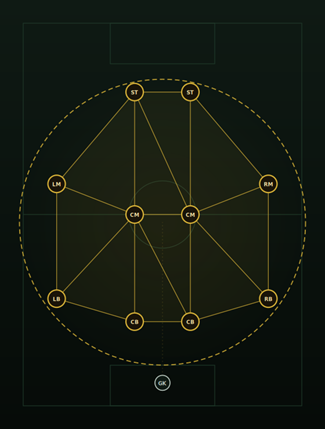
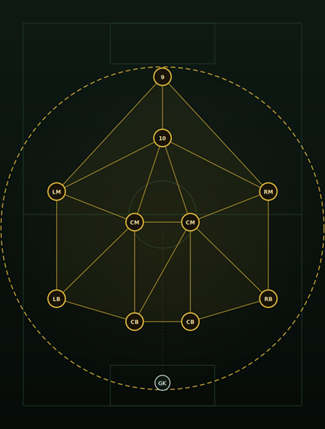
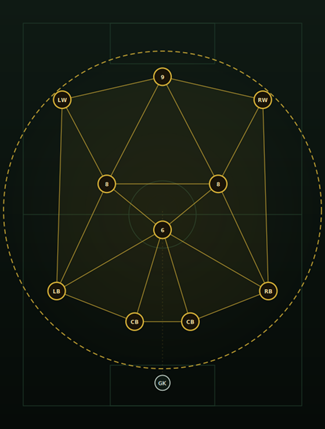
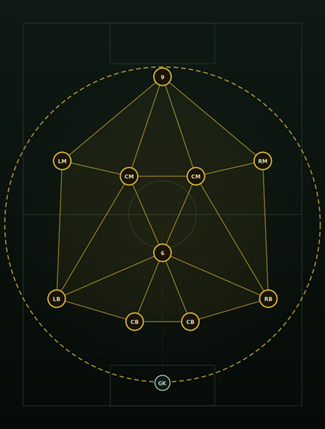
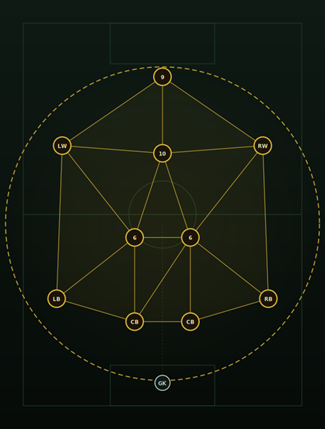
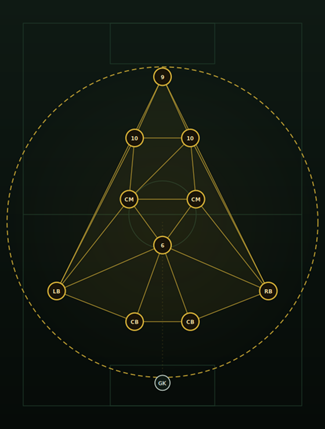
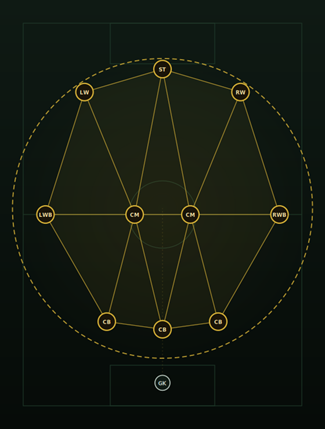
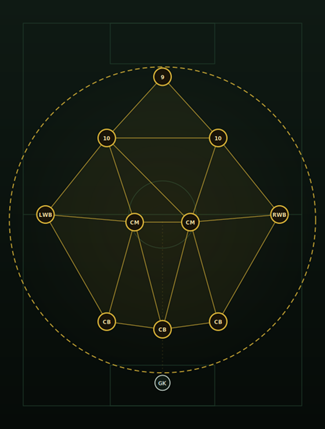
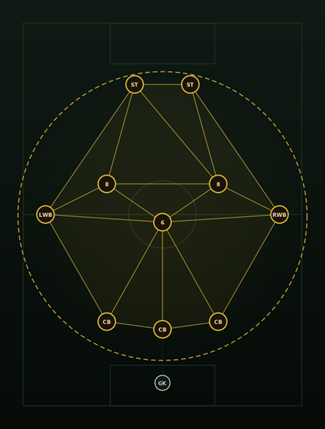
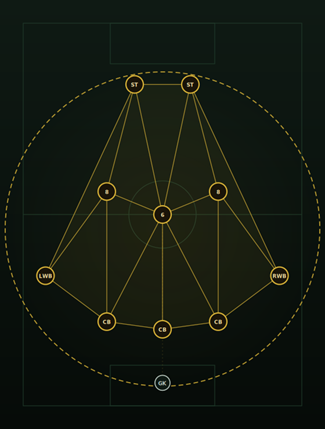
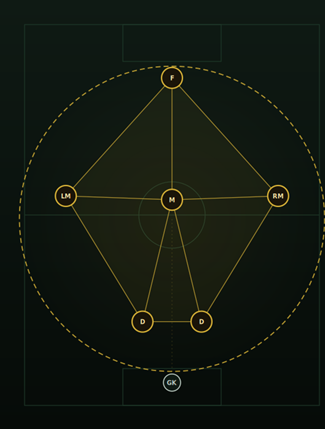
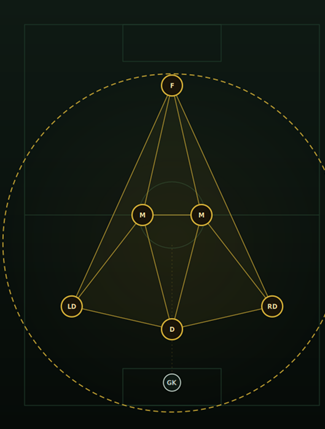
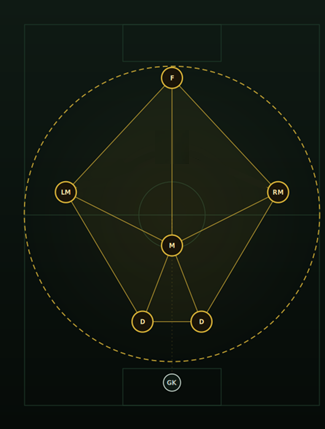
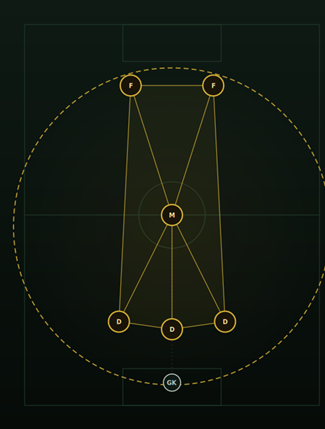
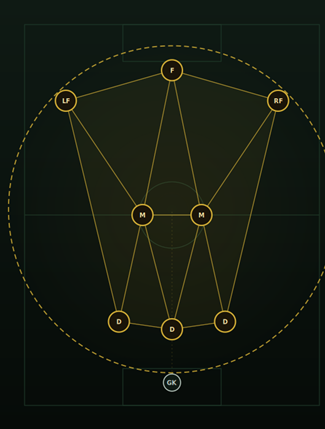
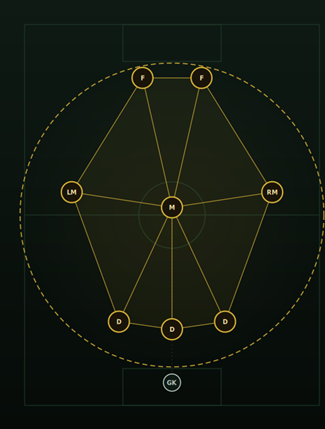
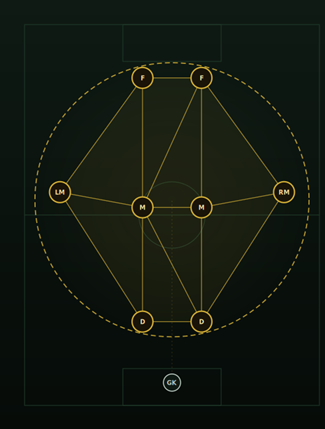
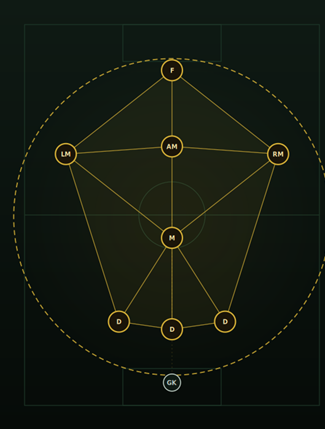
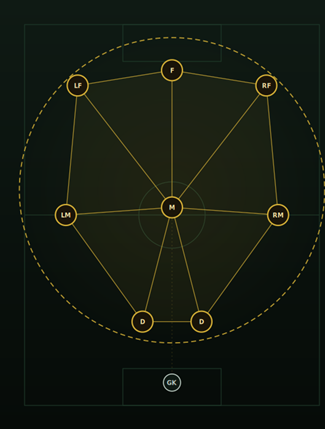
Our formation system, built on a simple idea: every team shape fits inside a circle. What matters isn't the circle — it's the smaller shapes inside it that players actually create and use: the triangles, diamonds, squares, and rectangles formed through rondos. We cross-walk these shapes to all 10 adult formations and 9 youth formations, along with tactical skills and attacking/defending objectives — so players learn to read and build on the field the same shapes they first learn in a rondo.

What does "score the pattern, not the moment" mean?

It's the core principle of our assessment doctrine: a single great or bad play doesn't define a player's level. We base evaluation on a documented pattern of evidence over time, not a highlight or a bad day.

What are the five development stages?

Fundamental (5–7, 7v7), Emergent (8–10, 9v9), Applied (11–13, 11v11), Proficient (14–16, 11v11), and Refined (17–18, 11v11).

Are players locked into stages by age?

No. We base stage placement on evidence, not birth year — a player advances when their SOAR and SDUO record supports it, not because a season ended.

How many skills does the platform track?

Approximately 265 individually defined skills and concepts across the five stages, covering technical, tactical, physical, psychological, and goalkeeping development.

Does the curriculum change per stage, or just scale down adult training?

Each stage has its own purpose-built curriculum appropriate to how players actually develop at that age.

How often are players formally assessed?

Three times per season: formative (early-season baseline), ongoing (mid-season check), and summative (end-of-season evidence review).

What's the Daily Skills Tracker for, if formal assessment happens three times a year?

Formal assessments are checkpoints — they're not where development actually happens. The Tracker is where the real work gets done, in the days and weeks between those checkpoints. Every daily log a player builds becomes part of the evidence a coach draws on later. So when we assign a summative score at the end of the season, it isn't based on how a player performed in one evaluation window — it's backed by months of logged reps showing the pattern of improvement. The Tracker turns "trust me, I've been working on it" into a real, dated record a coach can actually score against. In short: formal assessments tell you where a player landed. The Daily Skills Tracker is how they got there — and it's what makes the summative score defensible instead of a guess.

Can a coach's personal opinion override the rubric?

No — that's the point. SOAR and SDUO require coaches to observe against a fixed rubric, the same way a trained educator scores classwork, replacing gut-feeling scouting with consistent, repeatable evaluation.

Does SportsRubrIQ track physical or psychological development, or just technical skills?

No — we assess all five domains. Our skill library spans technical, tactical, physical, psychological, and goalkeeping development markers appropriate to each stage.

How is this different from SkillShark, PlayMetrics, or SportsEngine?

Those platforms handle rosters, scheduling, and payments. We built SportsRubrIQ as a development and assessment layer — we answer, "is this player actually improving," which roster-management tools aren't built to do.

Can we bring our existing roster in, or do we start from scratch?

CSV import gets a full roster in quickly, with direct integrations available depending on your current system. Manual entry also works for smaller rosters or single-team onboarding.

How long does onboarding take?

Most clubs are fully onboarded and assessing players within a single preseason window.

Do coaches need special training to use the platform?

We designed the rubric-based system to be intuitive for anyone coaching at the relevant stage, though we provide onboarding support and assessment doctrine documentation to get every coach speaking the same language.

What do parents and players actually see?

Plain-language progress reports built off the same underlying SOAR and SDUO data coaches use — without the full rubric detail coaches need.

Is player data private and compliant with youth data laws?

Yes. We build our data practices around COPPA, FERPA, CCPA, and GDPR requirements, detailed fully in our Privacy Policy and Data Processing Agreement.

Who owns the assessment data — the club or SportsRubrIQ?

Clubs retain ownership of their roster and assessment data; specific terms are laid out in our SaaS Subscription Agreement.

How We're Different: Built for development depth.

The youth sports tech market is crowded, but most existing platforms solve different problems. We designed SportsRubrIQ specifically to define, measure, and track player development over a 13-year arc.